Future of ERP for Midmarket Manufacturing
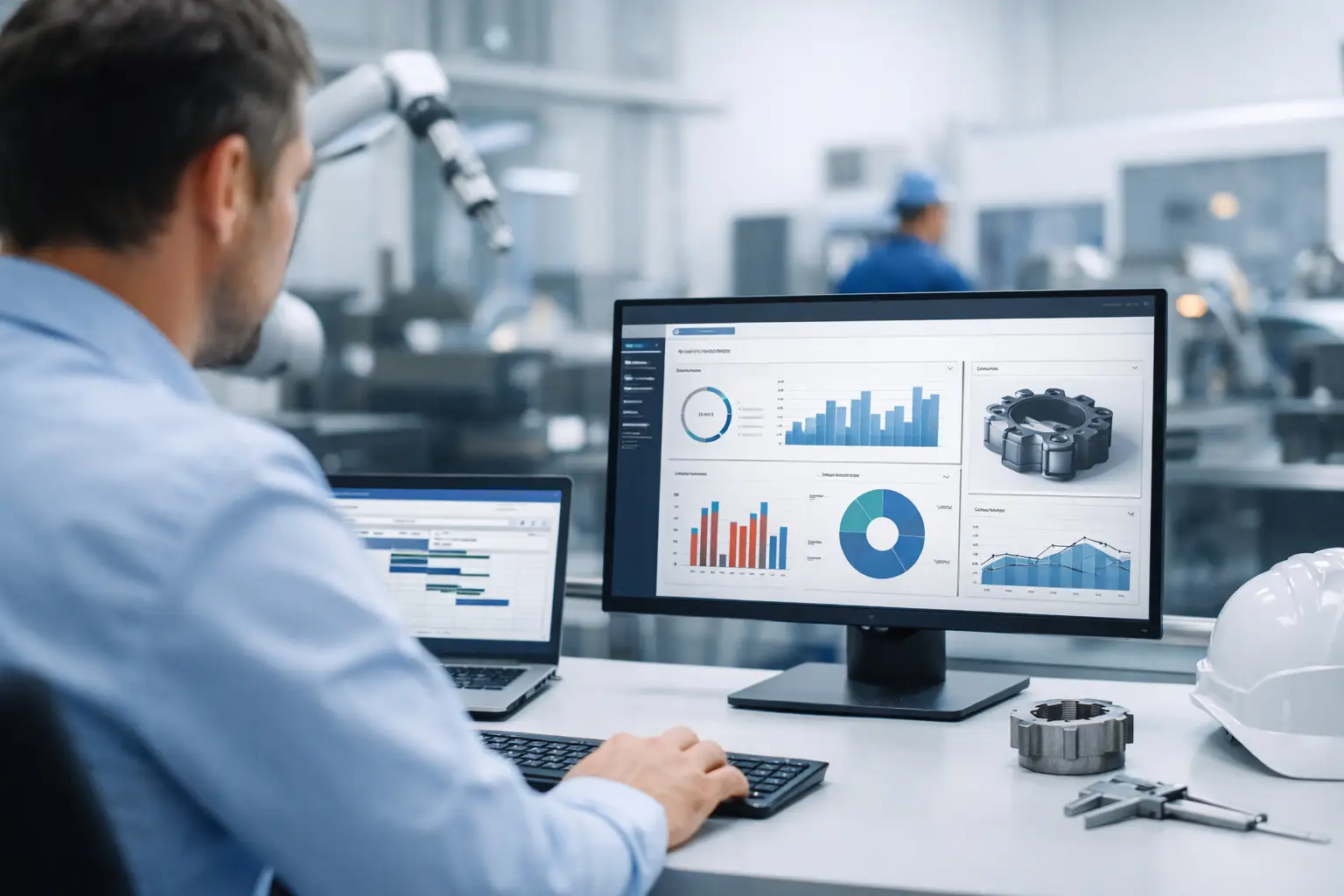
A production manager sees it first. Demand shifts faster than the forecast, lead times change without warning, and a spreadsheet that worked six months ago now creates more questions than answers. That is exactly why the future of ERP for midmarket manufacturing matters right now. For growing manufacturers, ERP is no longer just the system of record. It is becoming the system that helps companies respond, prioritize, and scale with more control.
Midmarket manufacturers are under pressure from every direction. Customers expect shorter lead times and more visibility. Suppliers are less predictable. Compliance requirements keep changing. Margins are tight, and labor remains difficult to plan. In that environment, the next generation of ERP is not about adding technology for its own sake. It is about giving manufacturers better information, better timing, and fewer operational blind spots.
What the future of ERP for midmarket manufacturing really looks like
For many manufacturers, ERP used to be judged by a simple standard: could it handle finance, inventory, purchasing, and production in one place? That still matters, but the expectation has changed. The ERP systems that will matter most over the next several years will not just record transactions after the fact. They will help manufacturers make better decisions while work is still in motion.
That shift shows up in practical ways. A planner wants to know whether a late raw material shipment will affect this week’s production schedule, not just whether the purchase order is overdue. A plant manager wants to identify where scrap is increasing before it becomes a margin problem. A CFO wants to see the financial effect of production delays without waiting for month-end close. The future ERP environment supports those questions with timely, connected data.
This is especially relevant in the midmarket. Large enterprises may have the budget for separate planning, analytics, quality, and supply chain platforms stitched together over time. Midmarket manufacturers usually need a more disciplined approach. They need an ERP foundation that can handle core operations well, while still supporting new capabilities as the business grows.
From transaction processing to operational intelligence
One of the biggest changes ahead is the move from passive reporting to operational intelligence. In practical terms, that means ERP will do more than store data. It will surface patterns, flag exceptions, and help teams act sooner.
Artificial intelligence and machine learning are part of this trend, but the value is not in the buzzwords. The real value is in better recommendations and faster response times. For example, an ERP system may help predict inventory shortages based on demand trends and supplier performance. It may identify unusual production variances or detect purchasing patterns that increase cost. For a midmarket manufacturer, these insights are useful only if they are accessible to the people running the business every day.
There is also a trade-off here. More intelligence is only helpful when the underlying data is reliable. If bills of materials are inconsistent, inventory transactions are delayed, or work order reporting is incomplete, advanced analytics will not fix the problem. It will simply expose it faster. That is why the future of ERP is not only about innovation. It is also about discipline in process design, data governance, and user adoption.
Cloud adoption will keep growing, but the path is not identical for everyone
Cloud ERP is already shaping the future of ERP for midmarket manufacturing, and that trend will continue. The appeal is straightforward. Cloud environments can reduce infrastructure burden, improve system accessibility, and make updates easier to manage. For manufacturers with multiple locations, remote decision-makers, or subsidiaries across regions, those benefits are significant.
Still, cloud adoption in manufacturing is rarely a purely technical decision. It often involves operational realities, internal resources, compliance concerns, and the pace of organizational change. Some companies are ready for a full cloud strategy. Others need a phased approach that prioritizes core business areas first.
What matters most is not whether a company adopts every new deployment model immediately. It is whether the ERP strategy supports long-term agility. A manufacturer that cannot adapt its systems when product lines expand, customer requirements change, or reporting expectations increase will feel that constraint quickly. The future belongs to businesses that choose ERP platforms with room to evolve.
Manufacturing-specific functionality will matter more, not less
As ERP capabilities expand, industry fit becomes even more important. Midmarket manufacturers do not need generic software with a manufacturing label attached to it. They need systems that reflect the realities of production, quality control, traceability, planning, and costing.
That need is especially clear in sectors with strict regulatory or customer requirements. Food and beverage manufacturers need lot traceability and shelf-life control. Pharmaceutical companies need stronger compliance support and process discipline. Discrete manufacturers may need more precise production scheduling, revision control, and shop floor visibility. In each case, the future ERP environment must support the business model, not force the business to work around the software.
This is where implementation experience becomes a major factor. Technology decisions are rarely just about features. They are about whether the system is configured in a way that reflects how the business actually operates. An ERP platform can be powerful on paper and still disappoint if the implementation ignores industry nuance.
Automation will reshape everyday work
Another major shift is the steady expansion of workflow automation. Midmarket manufacturers are looking for ways to reduce manual handoffs, duplicate entry, and approval delays. ERP will increasingly support that effort across finance, procurement, inventory, sales, and production.
The practical gains can be substantial. Automated alerts can flag delayed purchase orders before a line stoppage occurs. Approval workflows can keep purchasing and finance aligned without relying on email chains. Integrated quality and inventory processes can reduce the lag between what happens on the floor and what appears in the system.
Automation does not mean removing people from important decisions. It means reducing low-value administrative work so teams can focus on exceptions, analysis, and improvement. The companies that benefit most will be the ones that use ERP to simplify work, not just digitize existing complexity.
Better visibility across the business will become the baseline
Manufacturers used to treat visibility as a nice advantage. Increasingly, it is a baseline requirement. Leadership teams want a connected view of operations, finance, inventory, and customer activity without waiting for reports from multiple departments.
ERP will play a larger role in making that visibility usable. Dashboards and analytics are not new, but they are becoming more relevant as decision cycles get shorter. A plant leader may need to understand labor efficiency today, while finance wants to see margin performance by product line this week, and sales wants clarity on available-to-promise inventory now.
The key is context. More data alone is not progress. Midmarket manufacturers need ERP systems that present information clearly enough to support action. If a dashboard looks impressive but does not help a manager decide what to do next, it has limited value.
ERP projects will be judged more by adoption than go-live
In the past, some ERP projects were considered successful once the system launched on time and on budget. That standard is changing. The future of ERP for midmarket manufacturing will be defined more by business adoption than by technical go-live.
This is a healthy shift. A system only delivers value when people use it consistently and correctly. That requires process alignment, training, executive sponsorship, and support after implementation. It also requires realistic expectations. ERP should improve the business, but not every benefit appears on day one.
Manufacturers that treat ERP as a long-term operational platform tend to get better results than those that treat it as a one-time software purchase. That is one reason experienced implementation and support partners matter. Firms such as Consensus International have built their reputation by helping manufacturers move beyond installation and toward measurable business improvement.
How midmarket manufacturers should prepare now
The smartest preparation is not to chase every trend. It is to ask sharper questions. Where are decisions slowed down by disconnected data? Which manual processes create the most risk? What information do managers need but struggle to access? Where does growth start to strain current systems?
Those questions usually reveal whether the ERP issue is functionality, process maturity, reporting, or scalability. They also help leadership teams avoid a common mistake: trying to solve strategy problems with software alone. ERP can strengthen the business, but it works best when leaders are clear about the outcomes they want.
For some companies, the next step may be modernizing core financial and operational processes. For others, it may be improving planning, traceability, or multi-site visibility. The right roadmap depends on the business model, the pace of growth, and the complexity of the operation.
What is clear is that ERP is becoming more central to manufacturing performance, not less. The manufacturers that win will not necessarily be the ones with the most technology. They will be the ones that choose systems carefully, implement them thoughtfully, and use them to make faster, better-informed decisions every day.
The future of ERP is not a distant concept for midmarket manufacturing. It is showing up now in how companies plan, produce, respond, and grow. The real opportunity is not to predict every change. It is to build an ERP foundation that can handle change with confidence.